

My Story
To be honest, if I told my past self that my period no longer interfered with my life, she probably would have laughed in my face and thought I was lying.
My journey started 10 years ago, when I was prescribed the hormonal birth control pill at the age of 12.
To be honest, if I told my past self that my period no longer interfered with my life, she probably would have laughed in my face and thought I was lying.
My journey started 10 years ago, when I was prescribed the hormonal birth control pill at the age of 12.
Menarche for me was, as it seems to be for many young girls, annoying and inconvenient. I grew up with an older brother, and was often surrounded by boys who I had always been able to keep up with. I was always able to hold my own and compete with them in sports and other neighborhood games, and I was always treated as an equal.
Getting my period felt like a disadvantage. It felt like the first thing that separated me from so many of my childhood friends, and I saw it as something that made me weak. Looking back, I understand why I felt that way. It is what we’ve always been conditioned to believe, isn’t it?
I was originally handed the pill after a 5 minute appointment as a quick fix for bad cramps and some acne - and it felt like a miracle pill at the time. All I had to do was take a tiny pill every morning and my cramps and acne would go away, and I wouldn’t get the annoying period that prevented me from keeping up with my peers?? I was sold.
But I’m sure you’ve figured out that it wasn’t quite that simple. I was never told what the pill was actually doing to my body over time, and most importantly what would happen when I decided to go off of it.
After a decade of not having a real period or cycle, I finally felt called to stop suppressing my hormones and regain my natural cycle.
Coming off the pill wreaked havoc on my entire body.
I was experiencing crippling pain every single period, and would often end up curled in fetal position in my bed for the majority of the week. I remember vividly one time in college, my boyfriend had to drive me home in my own car because I was in too much pain to sit upright and drive the 3 minutes from his apartment to my house.
I was also dealing with cystic hormonal acne, IBS, complete shutdown of my immune system, and intense mood swings, just to name a few. It felt like every cell in my body was working against me to make me as miserable as possible. That might sound dramatic but it sucked!!!!
Now I don’t say any of this to incite fear around going off of the birth control pill. If I knew then what I know now, I would’ve had a much less turbulent adjustment. But I didn’t know what I didn’t know, because no one ever told me.
2 years after stopping the pill and still feeling miserable, I pushed to get answers from a naturopath doctor that finally listened to me and worked with me to heal what was happening at the root, instead of giving me another pill to use as a bandaid for my symptoms. Together we addressed my hormone health and gut health, which I learned was driving 99% of my symptoms.
I also dove into learning about my cycle and how to care for my body in the 4 phases of my menstrual cycle.
I leaned into nervous system regulation for the first time in my life, began to finally process the emotions that I had bottled up for years, and shifted the way I spoke about my body and about myself.
I began to see positive change almost immediately, and I almost couldn’t believe it.
Learning how my cyclical body works and what it needs to thrive changed every part of my life. I couldn’t believe that I had never been taught how to take care of myself as a person with a menstrual cycle, or that what my body needed was SO different from my male counterparts that I had grown up constantly trying to be like.
I no longer feel like I am constantly fighting against my body every single month. I have easy, pain free periods, my skin has cleared up, I am emotionally stable (for the most part LOL), and I rarely get sick. I feel strong, happy, and healthy the majority of the time.
However, I do feel enraged that women are not taught how their own bodies work. I feel like my life’s purpose is to teach as many women as I possibly can that their cyclical nature is a gift, not a curse. It is not inconvenient, it is a superpower when you learn how to harness it. We are literally superheroes. We are life forces.
My experience being dismissed and gaslit in healthcare drove me to get certified as a women’s hormone health practitioner, so I can help other women learn the ins and outs of their own cycle and heal their own hormone health. I can confidently say the work that I do gives women their power back and autonomy over their health.
If you feel the pull to come back to your body and take your power back, schedule a free 15 minute clarity call. I would love to be there every step of the way.
All my love,
Morganne <3

Your Period Isn’t the Main Event
I am coming to you on day 3 of my period which is slightly ironic considering we're talking about ovulation today, but when inspiration strikes what can I say??
This past week I had the absolute honor of hosting a women’s hormone health workshop for the most fabulous group of gals at the gym that I work as a trainer at.
It was my first time ever formally sharing a sliver of this knowledge to a group of people in real life, and I was shitting my pants a little bit.
I am coming to you on day 3 of my period which is slightly ironic considering we're talking about ovulation today, but when inspiration strikes what can I say??
This past week I had the absolute honor of hosting a women’s hormone health workshop for the most fabulous group of gals at the gym that I work as a trainer at.
It was my first time ever formally sharing a sliver of this knowledge to a group of people in real life, and I was shitting my pants a little bit.
It was so exciting and fulfilling, but also just a new experience which is always scary. I try to force myself to do new, scary things like this as often as possible because it really does zest up my life and attract the most incredible opportunities that I never would have known about had I stayed in my comfortable little nest.
But despite my nerves, I ended up being immersed in the most supportive, kind, nurturing group of women that reminded me why I continue to put myself out there to spread this knowledge.
Women are dependent on community and the sharing of knowledge and wisdom. WE are each other’s primary sources of information and advice because we are never formally taught what we need to know.
There were a few questions at my workshop that reminded me just how little we are taught. It is not our fault that we don’t have this knowledge already- but it is our responsibility to seek it out for ourselves.
One of the main aspects of hormone health that we discussed for a while that I find to be very misunderstood and neglected is ovulation.
Ovulation, to put it simply, is the release of an egg from its follicle that is supposed to happen every month.
Your body grows a new batch of follicles every single month, as soon as you start your cycle (day 1 of your period). Around day 6-10 of your cycle, a dominant follicle starts to emerge (whichever follicle shows the strongest traits indicative of the best chance of survival). This dominant follicle continues to fully mature, and around day 14 of your cycle, its egg is released and ushered down the fallopian tubes to either meet a handsome sperm companion or get released from the body in the next period/reabsorbed into the body along the way.
When the egg is released, the now empty follicle morphs into a temporary endocrine gland called the corpus luteum.
The corpus luteum is what produces almost all of your progesterone output that you get in the second half of the cycle. If you fall pregnant, the corpus luteum stays alive and continues pumping out progesterone to sustain a healthy pregnancy until the placenta takes over. If you don’t get pregnant, the corpus luteum stops producing progesterone and gets reabsorbed into the body, which is what signals your body to shed the uterine lining (aka start your period).
So why is this whole process so crucial?
When you are consistently ovulating, it is an indicator that your body is producing adequate hormone levels, feels safe, has sufficient nutrients, is well rested, and just generally healthy.
When we are in a state of chronic stress, from things like high pressure jobs, excessive stimulation from social media, toxic relationships, chronic or acute disease, under eating, over exercising, and/or not sleeping enough, our body will not ovulate. This is because our body’s are extremely smart, and they know when it is a safe environment for a healthy pregnancy, and when it’s not.
It is also important to note that you can technically still have a period without ovulating, which would just be considered an anovulatory cycle.
So, you can really only ensure that you are ovulating by tracking your entire cycle and your biomarkers a little bit more in depth. This includes tracking basal body temperature, cervical fluid, and potentially LH levels.
Basal body temperature is our internal body temp immediately upon waking in the morning. It is an ovulation biomarker because in the first half of the cycle, our temperature remains lower, and then as soon as we ovulate, our temperature spikes and remains higher throughout the rest of our cycle until our next period. You can track to see exactly when this spike happens.
Cervical fluid (discharge) is an ovulation biomarker because is changes in quantity, texture, and color throughout the cycle. As we approach ovulation, cervical fluid increases in quantity and becomes clear fertile quality - more stretchy, slippery, egg-white texture, which allows sperm to swim through it more easily! Immediately after ovulation, our cervical fluid reverts back to a drier, sticky/tacky, sometimes pasty and white quality.
Finally LH, luteinizing hormone. This hormone is THE primary ovulation biomarker because without fail, there will be a LH spike right before ovulation. Our LH levels remain pretty low for the first half of the cycle until 24-36 hours before ovulation when it spikes. It then immediately drops and remains low again for the rest of the cycle.
So you know that ovulation is a primary sign of health. But, just as importantly, it is an essential process for our body to form a corpus luteum, and therefore get that juicy, juicy progesterone for the second half of the cycle.
We spoke in my workshop about how the second half of the cycle, particularly the last week, is consistently the most difficult time of the month for a lot of women. This is because our hormonal shifts affect everything. They affect our energy levels, our moods, our calorie needs, our sexual interest and responsiveness, our preference in partners***, how we respond to physical pain, exercise, immunological threats, and even psychotherapy.
***women have been shown to prefer a completely different type of partner when they are in the first half of their cycle vs the second. they have also been shown to prefer a different type of partner when they are on hormonal birth control (hormone levels are suppressed) vs. off birth control. some women have even lost attraction to their partner that they begun a relationship with on birth control and then later got off of birth control (pretty crazyyyyyyyyy). this is mainly because of evolution - our ability to find a strong, healthy, suitable partner when we are actually fertile was historically crucial to our survival. women are essentially biologically hardwired to prefer men with higher testosterone levels in their fertile phase, and can literally differentiate/prefer the scent of men with higher testosterone, which can signal good genes, health, and higher sexual desire*** (I think this is insanely cool if you can't tell).
What’s even crazier, considering how important our cyclicity is to our entire life experience, is that science and medicine have essentially completely ignored the second half of women’s cycles. They hardly include women in studies to begin with, but when they do, they are almost ALWAYS in the first half of their cycle, when estrogen is dominant and everything is happy and rainbows and about sex.
This leads to the vast majority of women constantly living in accordance to recommendations that were only created for women in the first half of the cycle. How they work, eat, socialize, exercise, sleep, etc. When women do not understand that they are cyclical beings whose needs shift throughout every single month, that is when we see intense PMS, inflammation and really, really difficult luteal phases. When we begin to understand the function and purpose of the changes our bodies undergo across each cycle, we can finally begin to understand what our bodies need in the luteal phase and find relief.
Back to the sweet, juicy hormone called Progesterone. My queen.
Progesterone gets a bad rep because it is dominant in the luteal phase, and therefore associated with all the luteal phase struggles.
However, progesterone is not the enemy. When it is produced in adequate amounts, it actually has a soothing effect on the nervous system. It eases anxiety, facilitates memory and promotes healthy sleep. It helps to maintain healthy brain function and mood regulation. It also supports breast and heart health, and acts to protect the brain from damage and help repair after injury.
She’s a beast!
Oftentimes, when someone is suffering from PMS, inflammation, acne breakouts, mood swings, irritability, etc. in their luteal phase, my first investigation is whether or not they are ovulating, and if so, whether or not their corpus luteum is producing enough progesterone.
Without these two things happening, our bodies miss out on the benefits of the hormone that is actually supposed to make us feel prettyyyyyyyy great and chill.
I hope this is as cool and interesting to you guys as it is to me. I feel like I need one of those white suburban mom decor signs that says “Keep Calm and Ovulate”.
The moral of the story is that our bodies are incredible and everything that happens internally is intentional, and for a reason. It is simply our job to pay attention, listen, and support.
Love you guys always,
Morganne
The Science Behind Weightlifting for Hormone Health
I feel like women’s health has taken on a bit of a warped spotlight position on social media recently.
On one hand, I am really happy to see so many aspects of women’s health finally being talked about. I believe that it makes a world of a difference for women to see that they are not alone in their experiences. We are conditioned to feel like we can’t talk about our health related struggles, and it leads to a lot of women feeling crazy and alone and like something is wrong with them.
On the other hand, I feel like the way that social media has taken this ‘new’ topic of discussion by storm is a little bit extreme. Most of the women I talk to have a daily anxiety loop running through their heads that sounds a little something like this:
I feel like women’s health has taken on a bit of a warped spotlight position on social media recently.
On one hand, I am really happy to see so many aspects of women’s health finally being talked about. I believe that it makes a world of a difference for women to see that they are not alone in their experiences. We are conditioned to feel like we can’t talk about our health related struggles, and it leads to a lot of women feeling crazy and alone and like something is wrong with them.
On the other hand, I feel like the way that social media has taken this ‘new’ topic of discussion by storm is a little bit extreme. Most of the women I talk to have a daily anxiety loop running through their heads that sounds a little something like this:
“I need to eat more protein”
“I need to lower my cortisol”
“I need to have less screen time and pick up a new hobby”
“I need to lift weights and gain muscle”
“I need to take creatine and collagen and electrolytes”
“I need to do red light therapy”
“I need to get rid of all of the environmental toxins in my home”
Etc!
I too have fallen victim to this idea that there is ALWAYS something we need to improve in terms of our health.
Are there things from this list and other wellness practices on social media that are actually very powerful and important? Absolutely.
And truthfully, there always will be things we COULD improve. We will never be of 100% perfect health and have zero contact with environmental toxins and be in perfect shape with a perfect sleep schedule and perfect nutrition.
If there’s one thing I think we can all agree on about the human race, it’s that we are not a perfect species by any means.
Life happens and certain things take precedent, and that is ok.
But what matters more than being perfect, is giving yourself grace and understanding yourself and your body.
One of my most prominent health philosophies is that healing does not come from restriction and obsession.
When we are obsessed with every single thing we do and every single thing we put in our body, it only creates more stress for our body to manage.
When we are in tune with how we feel and WHY we feel that way, we can shift from a place of feeling like we need to ‘fix’ our symptoms and do more - to a place of slowing down, listening to what our body is trying to tell us, and what we can do to support ourselves to heal.
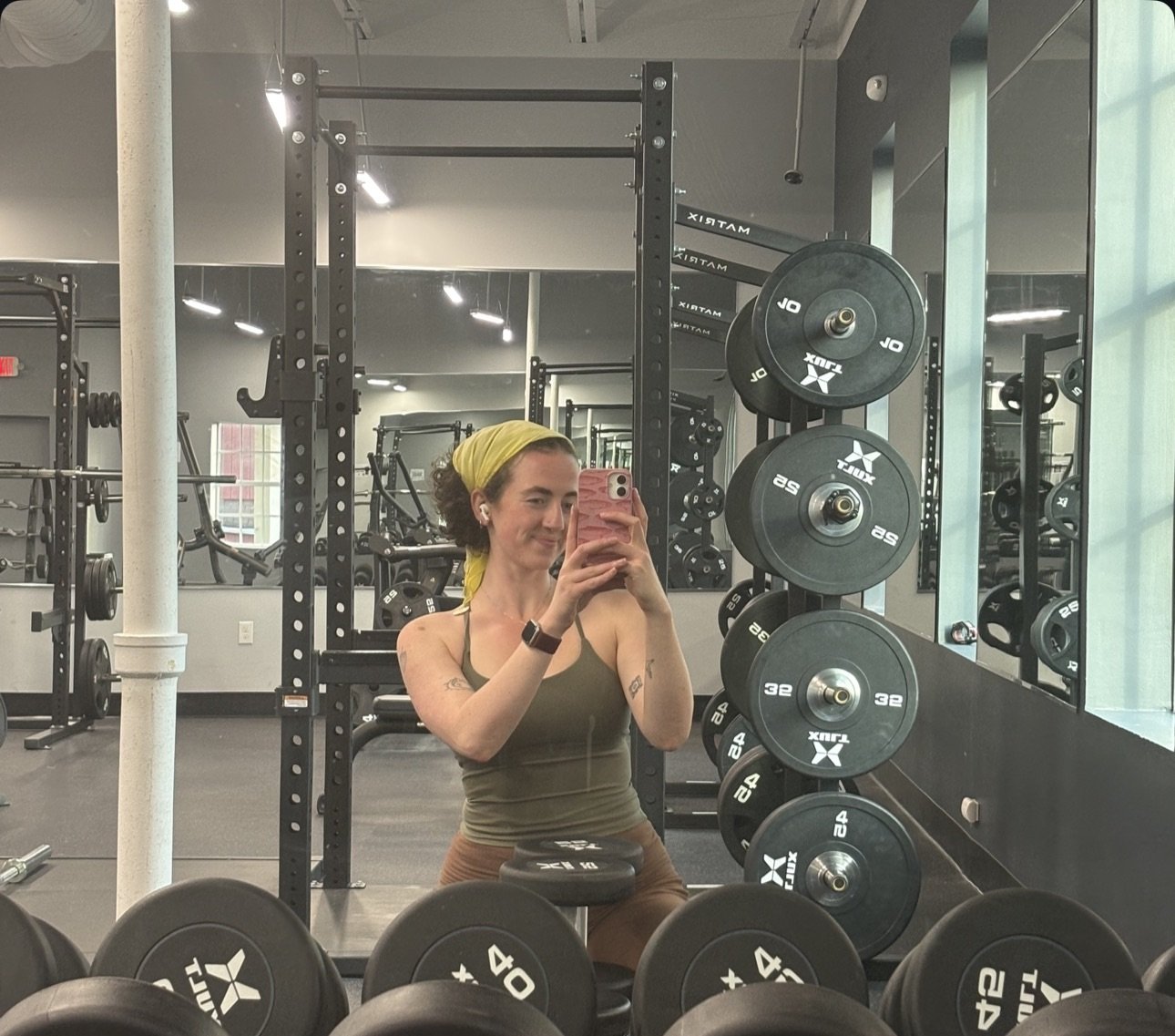
Now, with all that being said, today I want to talk about strength training and if it is really as important as everyone on social media is saying!
As someone who is committed to understanding the science behind everything that effects women’s health and hormones, I find it very helpful and motivating to deeply understand WHY I do the things I do to stay healthy.
If I don’t understand why doing ‘xyz’ health practice is going to make ‘xyz’ in my body feel better or heal, then I am not going to be very inclined to blindly stay consistent with that health practice.
So let’s start with the basics - what is strength training?
Strength training is a type of physical activity where your muscles need to contract against an outside resistance/weight to build strength and muscle mass. By putting extra weight on your muscles, you stimulate growth and muscle endurance.
Now, what does strength training/lifting weights do for our hormones?
When we have more muscle mass, we have better blood sugar regulation. This means less chronic insulin and cortisol spikes, which disrupt the entire endocrine system.
Blood sugar regulation is our body’s way of keeping glucose levels stable, essentially acting like a thermostat for energy. When our glucose is too high, often after eating a big meal or a lot of sugar, our pancreas secretes insulin to lower glucose levels. When our glucose is too low, often after a big spike in blood sugar or if we aren’t eating enough, our pancreas secretes stored energy in the form of glucagon and our adrenal glands secrete cortisol to raise blood sugar levels.
So when our blood sugar and glucose are stable and regulated, our body does not need to constantly stimulate insulin/cortisol spikes.
Stable blood sugar increases metabolic efficiency and reduces fat storage - because avoiding spikes prevents excessive insulin, which otherwise directs the body to store excess energy as fat.
Therefore, the more muscle mass that we have, the quicker our metabolism is, and the more stable our insulin and cortisol levels are! Pretty cool!
Next, let’s talk bone health.
Estrogen declines naturally as we age and enter perimenopause/menopause. Among a multitude of other symptoms that come with estrogen loss, one of the most prominent is a decrease in bone density.
Healthy estrogen levels increase bone density by maintaining a critical balance in bone remodeling - it suppresses the cells that break down bone, and supports the survival of the cells that build new bone.
I don’t know if it’s just me but I feel like that’s very boss bitch of estrogen. We love her. She’s such a cool repairwoman in regard to our bones.
So that is why once we reach perimenopause and start losing estrogen, bone density also begins to decline.
Now for the coolest part!!
Lifting weights and putting healthy stress on bones literally does the same thing as estrogen - it stimulates the cells that build new bone, therefore slowing age-related bone loss by creating new bone at a quicker rate.
Women reach peak bone mass in their 20s, and can lose up to 20% of their bone density in the 5-7 years following menopause. 20%!!!!!!
That is why building muscle and strength training to support bone density in your 20s-30s is so crucial to set yourself up for more protection in perimenopause and beyond.
HOWEVER!
If you have reached perimenopause or menopause and are slightly panicking reading this or hearing all of the LIFT WEIGHTS bonanza on social media because you have not started the whole weight training thing yet, please, please take a deep breath.
Listen to me when I say this.
It is never too late to start. It is never too late to build muscle and bone mass. You will NEVER be too old to build muscle and bone mass.
One of my clients who has recently reached menopause admitted that she thought once she lost muscle and bone mass she could never gain it back.
We had a very long chat after I heard that, as you can imagine, and she left feeling so much more motivated and hopeful to stay consistent with strength training because she knew it was actually doing something for her health.
It is so important to know that you are always the boss of your own health. Now is always the perfect time to start.
Even if you are already in menopause, building muscle and bone density will support your health in a multitude of ways. You will see improvements in metabolism, energy, sleep, etc.
So unfortunately, the social media girls are not wrong that strength training is important (although I am one of the freaks that actually really enjoys lifting weights, maybe you are too and you just don't know it yet!)
Does it need to look like the perfect workout set and perfect routine at the gym 7 days a week? Absolutely not.
Weight training can take on a lot of different forms, but the science is clear that it is a gamechanger for hormone health and overall health at all ages.
If this resonated or you’re curious to hear more, send me a message! I love hearing from you guys and hearing what you can relate to.
As always, take care of yourselves and remember that you already have the tools to thrive within you.
LOVE YOU DIVAS,
Morganne
My Acne Journey
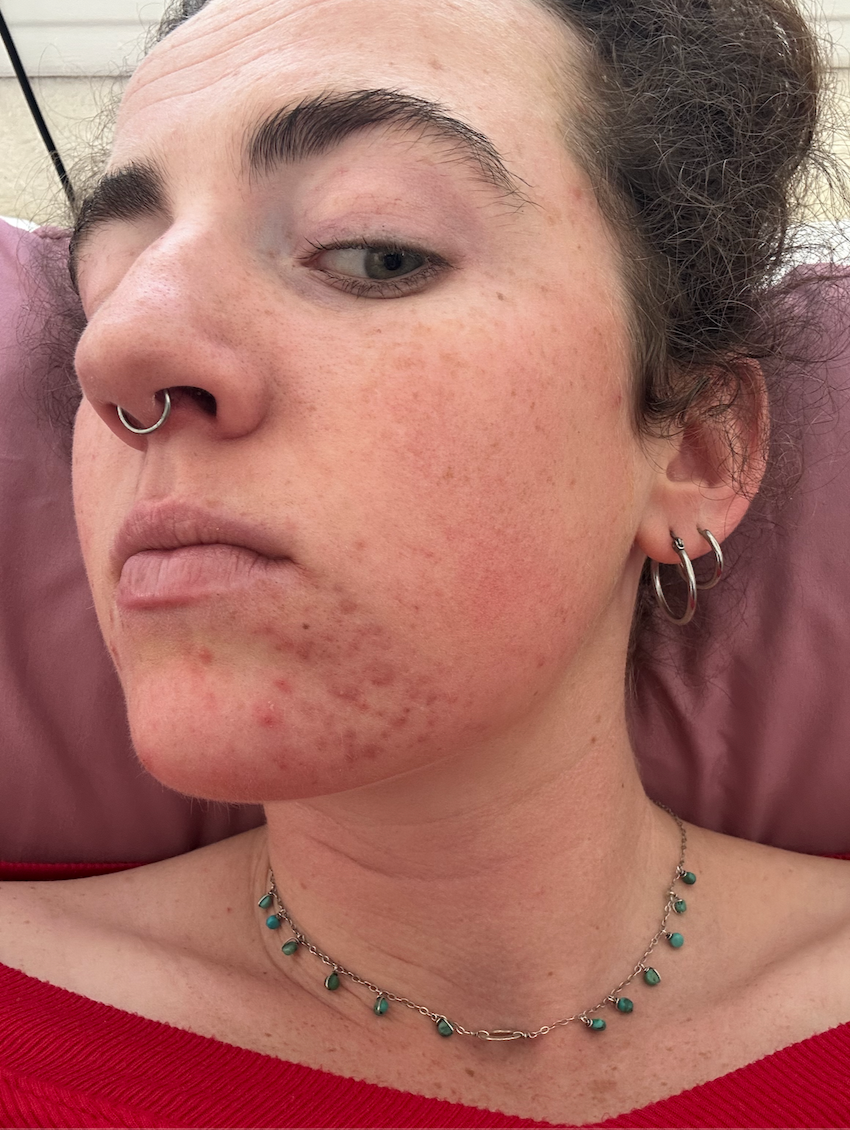
Today, I want to talk about my acne journey.
I want to start out by saying that if you have struggled with stubborn acne or a skin condition of any kind, I wish I could reach through the screen and give you a big hug.
When my acne was at its worst, the hardest part was the whiplash I felt between genuine, pure anger and frustration that I could not find a solution, and guilt because it felt like such a trivial, superficial thing to be so upset over.
I was dealing with painful, ruthless hormonal acne breakouts that WOULD NOT go away or ease up.
Hi again!
I took a little brain break from social media the past holiday season, and I am feeling much more clear headed about what I want to share in general.
I want to talk about things I have experienced firsthand, that I've found a lot of women are still hesitant to talk about openly.
And can you blame them??
Women have been conditioned to feel like they need to be perfect, high functioning robots in order to be worthy of respect and equality.
However, that is a chat for another day
Today, I want to talk about my acne journey.
I want to start out by saying that if you have struggled with stubborn acne or a skin condition of any kind, I wish I could reach through the screen and give you a big hug.
When my acne was at its worst, the hardest part was the whiplash I felt between genuine, pure anger and frustration that I could not find a solution, and guilt because it felt like such a trivial, superficial thing to be so upset over.
I was dealing with painful, ruthless hormonal acne breakouts that WOULD NOT go away or ease up.
I genuinely tried every solution in the book.
Going on spironolactone.
Harsh benzoyl peroxide topicals.
Instagram skincare products that everyone "swore" cured their hormonal acne when nothing else did.
I even had a couple chemical peels done.
Every single time I tried something new, I felt a glimmer of hope that it would finally be the solution I'd been searching for.
And every single time my skin would get better for a few weeks, and then come back fighting worse than ever.
Every day when I woke up, the first thing I did was feel my skin to see if I had any new breakouts. Most days I did. And most days I immediately started the day in a very negative headspace.
I am sure that this sounds a bit dramatic (unless you've had this experience).
But it's the reality of how I felt for years.
Around a year ago, something finally clicked.
I realized that everything I had tried had been band-aid approaches to something that had to run much deeper.
I knew there was a root cause somewhere, and my body had been screaming at me for years to find it.
I found an incredible naturopathic doctor, who encouraged me to get some actual tests done to get real answers instead of just talking to me for 5 minutes and writing a new prescription - so I got a DUTCH test (hormones), GI Map test (gut microbiome), and blood work.
She asked me about every facet of my life and genuinely took all of my answers into account. She asked about my diet, my digestion, my sleep, my cycle, my exercise, if I had painful periods or PMS symptoms. I had never met with a doctor who took a FULL picture approach, instead of simply treating the symptoms as just that, isolated symptoms.
This was a game changer.
Because the reality is, our symptoms are so much more than just symptoms.
They are the signals that our body uses to communicate with us when something is off on a deeper level.
When we ignore those signals, our body has no choice but to make them louder and louder.
For the first time ever, I made the conscious shift to listen to what my body had been trying to tell me for so long.
I learned that I had leaky gut, which put simply, is when your stomach gets so inflamed that it creates small holes for undigested food, toxins, and bacteria to 'leak' out of the stomach into the bloodstream (). This can cause severe immune system dysfunction, skin problems, fatigue, even mood changes. I was experiencing all of these.
I addressed the general state of inflammation in my body in a few ways:
1. Rethinking what I had been eating every single day - I prioritized eating anti-inflammatory, whole foods (foods straight from the earth!) and found a new way of eating that was intentional and made my body feel good. Side note - I LOVE good food and cooking things that I am excited to eat, and that was not something that I had to sacrifice. If anything, I love the way I eat now so much more because I know exactly what the foods are doing for my body and I consider it an act of self love to eat food that fuels you and that your body will thank you for.
2. Rethinking the products that I was using - like I said, I had tried everything. I learned that using harsh cleansers with 50 different chemicals I couldn't pronounce was not doing me any good. I needed to trust my body and allow it to function naturally without drowning it. I began to wash my face once at night with warm water, and only use a gentle hydrating Blue Yarrow oil.
3. Rethinking rest - I hadn't realized the constant state of stress and my body was under, even when I thought I was 'resting'. My down time between schoolwork and my 3 jobs almost solely consisted of constant stimulation from my phone or tv, my brain and body never had time to just breathe. I began to prioritize quality sleep (not just quantity) by limiting blue light consumption after sunset, limiting alcohol and caffeine especially at times in my cycle where my skin and body were more sensitive to endocrine disruptors, and giving myself enough time to quietly wind down by reading or writing before bed.
4. Rethinking how I spoke to myself - Truthfully, this might have been the biggest shift in my skin. I had been so angry with my body for so long, and I verbalized it frequently. I would constantly complain to my friends, mom, and boyfriend that my body just 'didn't work right' and that something was just broken. Whenever my skin was flaring up, I would try so hard to be gentle with myself, but it was hard to not blame myself and my body. Every other shift that I made in my life, with my diet, products, and rest, was such a powerful act of self love that brought me one step closer to working with my body as one, instead of fighting against it. As I've learned more about all of the incredible things my body does to keep me alive and functioning, I've only grown in my appreciation and complete awe of how fucking AWESOME women are. And I don't let myself forget that my body is capable of being strong, resilient, and healthy.
Right before my eyes, my body and skin began to heal. I was pretty baffled that after all this time, all it took was eating the food that is right for my body and saying a big 'F you' to every weird instagram skin balm I was convinced to try (embarrassing). That, and treating myself with patience, love, compassion and curiosity instead of being angry with myself anytime something feels off or I wake up with a pimple.
I know this newsletter was a hefty one. -if you're still reading, thank you:)
This topic is so important to me because it was one of the most profound changes that happened when I learned about my body, my hormones, and how to take care of both.
My skin is certainly not perfect, and I still have flare ups. The difference is that now, I look at that flare up as a clue to something that my body needs or is telling me it doesn't like.
If you are struggling with acne now, whatever the cause is, I want you to know that it can get better. It may take some lifestyle shifts, but it is absolutely possible to feel your best in every facet of your health.
I will most definitely be chatting about this more, but as always, feel free to reach out with any thoughts and/or questions!
I appreciate you guys so much.
Go place your hands on your heart and say three things you love about yourself!!!
~ Morganne